
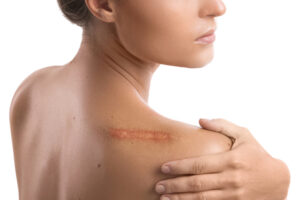
 Have you noticed that a scar continues to thicken or grow long after the original injury healed? While many scars gradually flatten and fade, keloids behave differently. Understanding how these raised scars develop can help you recognize when professional treatment may be beneficial.
MacInnis Dermatology provides experienced care for skin, hair, and nail conditions under the leadership of Dr. Colleen MacInnis, a board-certified dermatologist and highly trained Mohs surgeon. Known for her compassionate approach, Dr. MacInnis has performed more than 10,000 Mohs procedures and offers personalized care to patients throughout Central Florida.
What Is a Keloid?
A keloid is excess scar tissue that forms after the skin has been injured. It may develop following surgery, acne, burns, cuts, tattoos, piercings, or even minor scratches.
Unlike a typical scar, a keloid grows beyond the boundaries of the original wound. It may appear smooth, shiny, firm, or raised and can be pink, red, purple, brown, or similar to the surrounding skin. Some keloids also cause itching, tenderness, discomfort, or restricted movement.
Keloids Usually Do Not Disappear Naturally
Keloids generally do not go away on their own. They may stop growing and become less noticeable over time, but they rarely flatten or fade completely without treatment. This distinguishes them from hypertrophic scars, which remain in the original wound and may gradually improve.
Waiting for a keloid to disappear naturally may allow it to become larger or more difficult to manage. Early evaluation is especially helpful when a scar begins thickening, expanding beyond the injury, or causing uncomfortable symptoms.
Professional Treatment Can Improve Keloids
Although there is no single treatment that works for every keloid, dermatologists can often reduce its size, thickness, color, and symptoms. Depending on the scar, treatment may include:
- Corticosteroid injections
- Silicone sheets or gels
- Cryotherapy
- Laser treatment
- Surgical removal combined with additional therapy
- Pressure therapy
A combination of treatments may provide better results because keloids can return after treatment. Your dermatologist will consider the scar’s location, size, depth, and symptoms before recommending an individualized plan.
Improve Raised Scars With Keloid Treatment in Leesburg, FL
Professional keloid treatment may help flatten a raised scar, reduce irritation, and make it less noticeable. Dr. MacInnis and the experienced team at MacInnis Dermatology can evaluate your scar and recommend care based on your skin and treatment goals. Call 352-350-5230 to schedule a consultation and learn more about your options.