
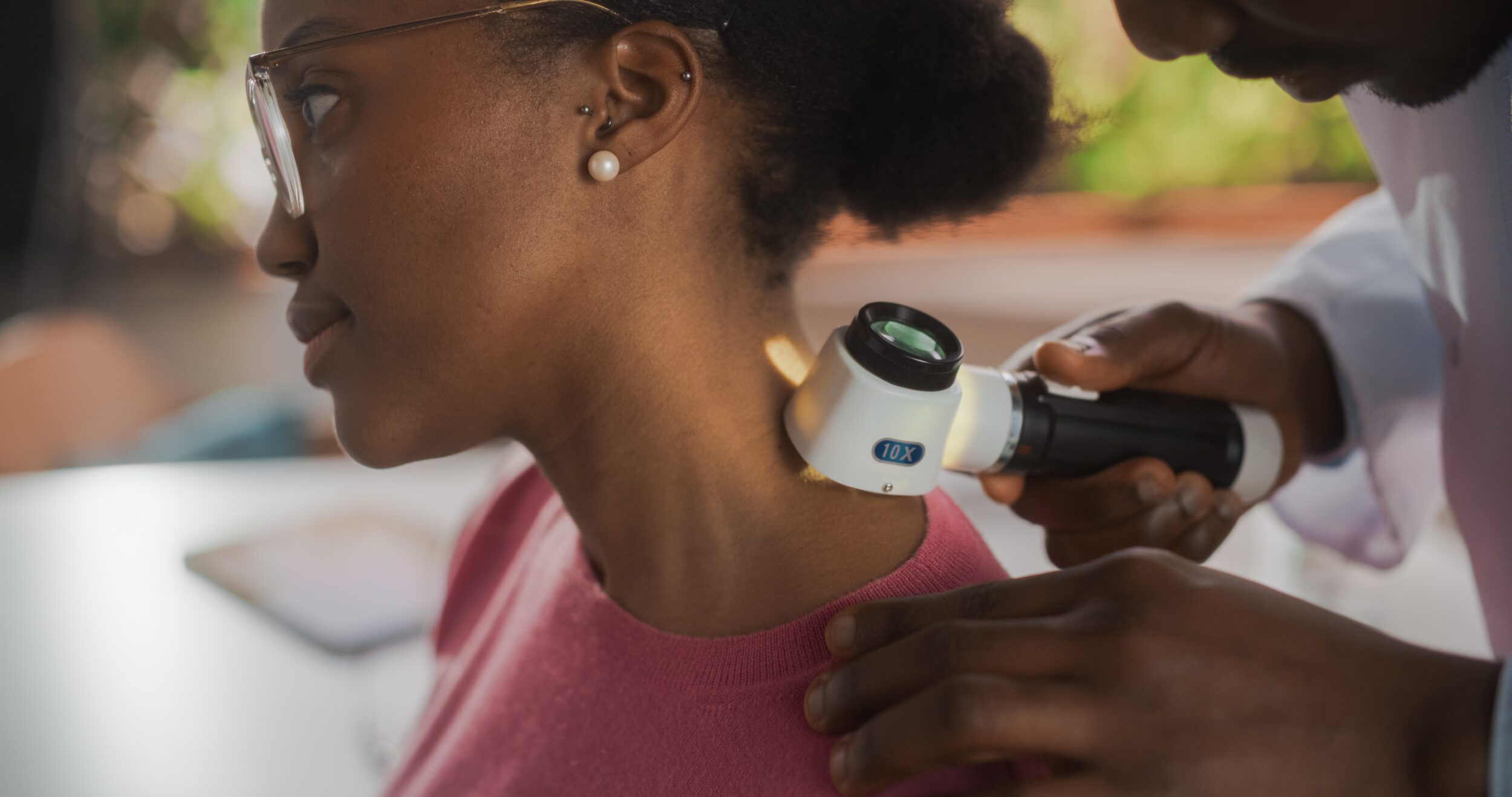
A sore that will not heal, a shiny bump, or a spot that repeatedly crusts or bleeds may seem minor, but it could signal basal cell carcinoma. Basal cell carcinoma (BCC) is a common type of skin cancer that usually grows slowly. Although it rarely spreads to distant areas, it can grow deeper and damage nearby tissue when treatment is delayed.
At MacInnis Dermatology, Dr. Colleen MacInnis provides comprehensive evaluation and treatment for skin cancer, including Mohs surgery when appropriate. As a board-certified dermatologist and Mohs surgeon who has performed more than 10,000 Mohs procedures, she has extensive experience treating both straightforward and complex skin cancers.
What Is Basal Cell Carcinoma?
Basal cell carcinoma develops from basal cells in the skin's outer layer. It often develops on areas that receive frequent sun exposure, including the face, nose, ears, scalp, neck, shoulders, and arms.
BCC is generally highly treatable, especially when detected early. However, you should not ignore it. Without treatment, the cancer can continue growing into surrounding skin and, in more advanced cases, deeper structures such as cartilage, muscle, or bone.
What Does Basal Cell Carcinoma Look Like?
Basal cell carcinoma does not always look the same. Depending on your skin tone and the type of BCC, it may appear as:
- A pearly, shiny, or translucent bump
- A pink, red, brown, or dark-colored growth
- A flat, scaly patch
- A sore that heals and then returns
- A spot that repeatedly bleeds or crusts
- A scar-like area without a known injury
- A slow-growing bump or rough patch
A dermatologist should examine any new, changing, bleeding, or non-healing spot. You cannot reliably diagnose skin cancer by appearance alone.
How Is Basal Cell Carcinoma Diagnosed?
Your dermatologist will first examine the suspicious area and your surrounding skin. If your dermatologist suspects basal cell carcinoma, they may perform a small skin biopsy to examine the tissue under a microscope.
The biopsy helps confirm the diagnosis and may provide information about the type of basal cell carcinoma. Your dermatologist can then recommend treatment based on the tumor's location, size, depth, subtype, and whether it has been treated before.
How Is Basal Cell Carcinoma Treated?
Treatment focuses on completely removing or destroying the cancer while preserving healthy tissue. Surgery remains the main treatment for many basal cell carcinomas, although several options may be considered depending on your individual diagnosis.
Treatment may include:
- Surgical excision: The cancer and a margin of surrounding skin are removed.
- Mohs surgery: Layers of tissue are removed and then examined under a microscope during the procedure until no cancer cells remain.
- Curettage and electrodesiccation: Selected tumors may be scraped away and treated with controlled electrical energy.
- Topical medications: Certain superficial, low-risk basal cell carcinomas may be treated with prescription medication.
- Other treatments: Cryosurgery, photodynamic therapy, or radiation may be appropriate in select circumstances.
Your treatment plan is personalized rather than based on a single approach for every BCC.
When Is Mohs Surgery Used for Basal Cell Carcinoma?
Mohs surgery may be recommended when preserving healthy tissue is especially important or when a tumor has features that increase the risk of recurrence.
It is commonly considered for certain basal cell carcinomas that are large, aggressive, recurrent, or located on areas such as the nose, ears, eyelids, scalp, hands, or feet. During Mohs surgery, the surgeon removes tissue one thin layer at a time and examines it for remaining cancer cells before removing more tissue.
This precise approach can provide a high cure rate while limiting unnecessary removal of healthy skin.
Why Choose MacInnis Dermatology for Basal Cell Carcinoma?
Dr. Colleen MacInnis is a board-certified dermatologist and experienced Mohs surgeon with extensive training in dermatologic surgery and pathology. Her experience includes more than 10,000 Mohs procedures, including complex cancers involving the face, ears, nose, and body.
MacInnis Dermatology provides comprehensive medical dermatology, skin cancer evaluation, and Mohs surgery, so your care is coordinated with your diagnosis and treatment needs.
Protect Your Skin With Basal Cell Carcinoma Treatment in Leesburg, FL
Basal cell carcinoma is highly treatable in many cases, but early evaluation can help keep treatment as straightforward as possible and reduce the risk of deeper tissue damage. If you have noticed a suspicious, changing, bleeding, or non-healing area, MacInnis Dermatology can evaluate your skin and recommend an appropriate treatment plan.
Call 352-350-5230 to schedule a consultation for basal cell carcinoma treatment in Leesburg, FL.